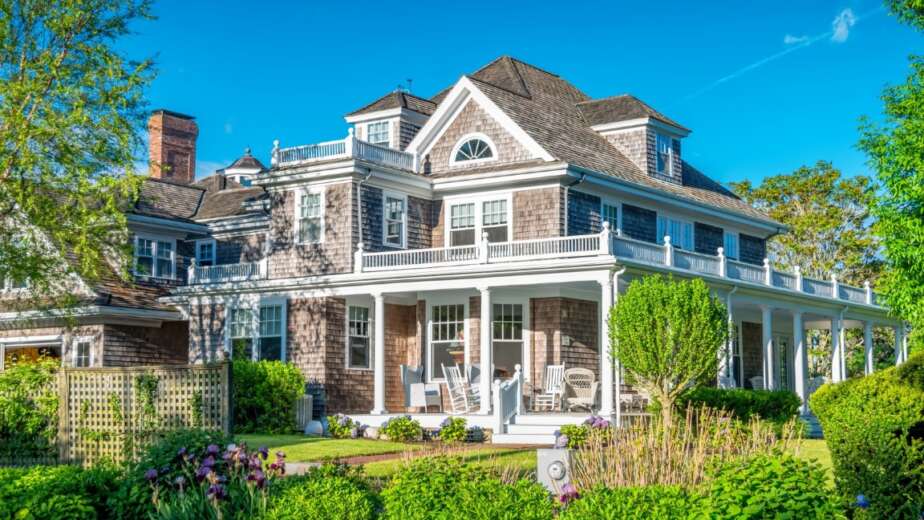
Homeowners who search for restoration contractors near me are usually standing in front of a house that deserves better than a quick fix. Maybe it is a Victorian with failing slate, a Federal-style home with rotted sills, or a Colonial Revival whose original details were buried under decades of well-meant updates. The challenge is finding a firm that knows how to save what is worth saving, rather than replacing it with something that only looks similar from the street.
Halliday Homes restores older and historic homes throughout Westwood, Newton, Brookline, Wellesley, Lexington, Winchester, Needham, Dover, Weston, and surrounding Greater Boston communities. This guide explains restoration element by element, from the foundation to the roof. It also explains why local knowledge matters when you choose a restoration contractor.
This guide serves owners of homes that are 100 years old or more. It also helps buyers considering an older house understand what bringing it back can involve.
First, Which Kind of Restoration?
The word restoration covers two very different industries. One is emergency damage restoration: water extraction, fire and smoke cleanup, and mold remediation after a burst pipe or storm. The other is architectural restoration: repairing and preserving the historic fabric of an older home.
This guide covers the second type. For active water damage or a recent fire, call an emergency mitigation company first. A restoration contractor focused on historic work can help with the rebuild afterward.
Knowing the difference helps you search well. Many results for restoration contractors near me will be emergency services. To preserve an older home, seek firms that show completed historic work rather than equipment and response times.
Why Local Matters More in Restoration
Restoration is more local than almost any other kind of construction. Greater Boston homes built a century ago reflect regional materials, craft traditions, and climate. A contractor with experience in the same towns knows the common patterns and what to expect behind the walls.
Local knowledge also extends to regulation. Historic district commissions, demolition delay bylaws, and preservation restrictions differ town by town. Lexington, Brookline, Winchester, Newton, and Wellesley each have their own processes and their own expectations.
That is the real value of searching for restoration contractors near me. Proximity matters less for travel time than for familiarity with the houses and the review boards in your community.
Assessment Before Anything Else
Start every restoration with a careful condition assessment. Review the foundation, framing, roof, exterior envelope, windows, interior finishes, and systems. Document what is original, what has changed, and the condition of each element.
A good assessment separates urgent repairs from work that can wait. It also identifies original materials worth preserving and materials that have deteriorated beyond reasonable repair.
Be cautious of restoration contractors who propose a scope before this assessment is done. Restoration decisions depend on what is actually there, and that requires looking closely.
Foundations and Sills
Many older Greater Boston homes sit on fieldstone, rubble, or brick foundations. These can last indefinitely with proper water management. However, mortar erodes, stones shift, and moisture finds its way in.
Restoration may include repointing with mortar compatible with the original. It can also include correcting drainage and addressing basement moisture. Modern hard cement mortars can damage historic masonry, so material selection matters.
Sill plates are the timbers that sit on the foundation. They often fail in older homes when grading or gutters direct water against the house for decades. Replacing sills requires skilled work and temporary support for the structure above.
Framing and Structural Repair
Builders often used full-dimension lumber, timber framing, or balloon framing in older homes. Each system has its own strengths and vulnerabilities. Over a century, plumbing cuts, later alterations, insects, or rot may weaken the framing.
Structural restoration aims to repair rather than replace wherever possible: sistering damaged members, adding reinforcement where loads have increased, and correcting past alterations that compromised the structure. Where replacement is necessary, it should be done in a way that respects the original system.
Restoration contractors should work with a structural engineer who understands historic construction, because applying modern assumptions to older framing can lead to unnecessary demolition.
Roofing: Slate, Copper, and Wood
Many historic homes in the region have slate roofs, copper flashing and gutters, or wood shingles. Slate in particular can last a very long time, but the flashing and fasteners often fail long before the slate itself.
Restoring a slate roof usually involves replacing broken or missing slates with matched material, renewing flashing at chimneys and valleys, and repairing copper work. Wholesale replacement is sometimes necessary, but it should be a conclusion, not a starting assumption.
Ice dams are a persistent New England problem. Addressing them in an older home often involves improving attic insulation and ventilation in ways that do not trap moisture in the roof assembly.
Exterior Siding, Trim, and Masonry
The exterior is the most visible part of a restoration and the part historic commissions care about most. Original clapboard, shingles, cornices, brackets, and trim often survive beneath later siding or layers of paint.
Restoration means repairing damaged wood with matching species and profiles, reproducing missing trim, and preparing surfaces carefully for paint. On masonry homes, it means repointing, repairing damaged brick or stone, and cleaning gently enough not to harm the surface.
Homes built before 1978 almost certainly have lead paint on the exterior, which requires lead-safe practices during preparation. Any restoration contractor working on older exteriors should explain exactly how they handle it.
Historic Windows
Original wood windows are frequently replaced when they could be restored. Old-growth wood is often more durable than what is available today, and a properly restored window with good weatherstripping and a storm window can perform well.
Window restoration typically involves repairing sashes, replacing broken glass and failed glazing putty, restoring counterweights and cords, and adding weatherstripping. It is labor-intensive but often comparable in cost to high-quality replacement, while preserving original character.
Historic commissions commonly prefer restoration over replacement for street-facing windows. Restoration contractors familiar with local review will know what is likely to be approved.
Plaster, Millwork, and Interior Details
Inside, original plaster, moldings, paneling, staircases, and built-ins give an older home much of its character. Plaster that appears damaged can often be reattached and repaired rather than torn out and replaced with drywall.
Missing or damaged millwork can be reproduced by matching profiles exactly, sometimes requiring custom cutting knives. Original hardwood floors can often be repaired with salvaged or matched old-growth material and refinished.
The best restoration work is nearly invisible when finished. You should not be able to tell where the original stops and the repair begins.
Bringing Systems Up to Date Discreetly
A restored home still needs modern electrical, plumbing, heating, and cooling. The challenge is installing them without damaging historic fabric or cluttering original spaces.
That can mean routing new wiring through existing chases, using small-duct high-velocity systems or carefully placed heat pumps that require minimal demolition, and planning plumbing runs to avoid cutting through original framing and finishes.
Knob and tube wiring, outdated plumbing, and inefficient heating are common in older homes. Restoration contractors should plan system upgrades as part of the overall scope rather than as afterthoughts.
Historic Commissions and Preservation Rules
Local historic districts, demolition delay bylaws, and preservation restrictions affect what can be done to many older homes in the area. Some reviews apply only to exterior changes visible from a public way. Others reach further.
The process typically involves submitting drawings and material information and appearing before the commission. Applications that show understanding of the house and its history tend to move more smoothly.
Ask restoration contractors near you which commissions they have worked with and what timelines they typically see. Those timelines belong in the project schedule from the start.
Energy Performance Without Erasing Character
Older homes are often drafty and expensive to heat, and owners reasonably want them to perform better. The challenge is improving comfort without trapping moisture in assemblies that have stayed sound for a century precisely because they could dry out.
Thoughtful approaches include air sealing the attic and basement, insulating attics with attention to ventilation, restoring windows and adding quality storm windows, and upgrading heating systems. Insulating exterior walls in an older home requires more care, because adding insulation changes how moisture moves through the wall.
Restoration contractors should explain how they evaluate each assembly before recommending insulation. The right answer depends on the specific construction, the exposure, and the condition of the siding and sheathing.
Questions to Ask Restoration Contractors Near Me
When comparing firms, a few questions reveal real restoration experience quickly. Ask to see completed historic projects in person, not just photographs. Ask what share of their work is restoration versus general renovation. Ask which historic commissions they have appeared before and what was approved.
Ask how they decide between repair and replacement for windows, trim, and roofing, and who does their specialty work: slate roofing, plaster repair, window restoration, and masonry. Ask how they handle lead-safe practices on an older exterior.
Finally, ask for references from owners of homes similar in age to yours. When you search for restoration contractors near me and start making calls, the firms that answer these questions specifically and readily are the ones worth meeting.
When Restoration Gives Way to Renovation or Rebuilding
Not every element of an older home can or should be restored. Sometimes deterioration has gone too far, or previous alterations have already erased the original fabric. Sometimes the homeowner’s needs require changes that go beyond restoration.
A thoughtful restoration contractor will help you decide where to preserve, where to renovate, and where to build new, and will be honest when restoration of a particular element no longer makes sense.
The goal is a home that keeps its character and works for modern life, not a museum piece and not a gutted shell behind a historic facade.
Why Halliday Homes
Historic restoration is one of the core services at Halliday Homes, and it reflects decades of experience working on homes that are 100 years old or more. We take a limited number of projects at a time, with hands-on involvement from the first assessment through the final walkthrough.
Because we also build new custom homes and handle major renovations and additions, we can give an honest view of where restoration makes sense and where another approach will serve the house better. Our depth across Greater Boston means we know these houses, these materials, and these review boards.
Searching for Restoration Contractors Near Me? Let’s Connect.
If you own an older home in Greater Boston and want to understand what restoring it would involve, Halliday Homes welcomes a conversation about your house, its history, and what is realistic. We are glad to be one of the restoration contractors you consider, and glad to say honestly if we are not the right fit.
Visit hallidayhomesinc.com to start the conversation. We serve homeowners throughout Westwood, Newton, Brookline, Wellesley, Lexington, Winchester, Needham, Dover, Weston, and the surrounding Greater Boston communities.